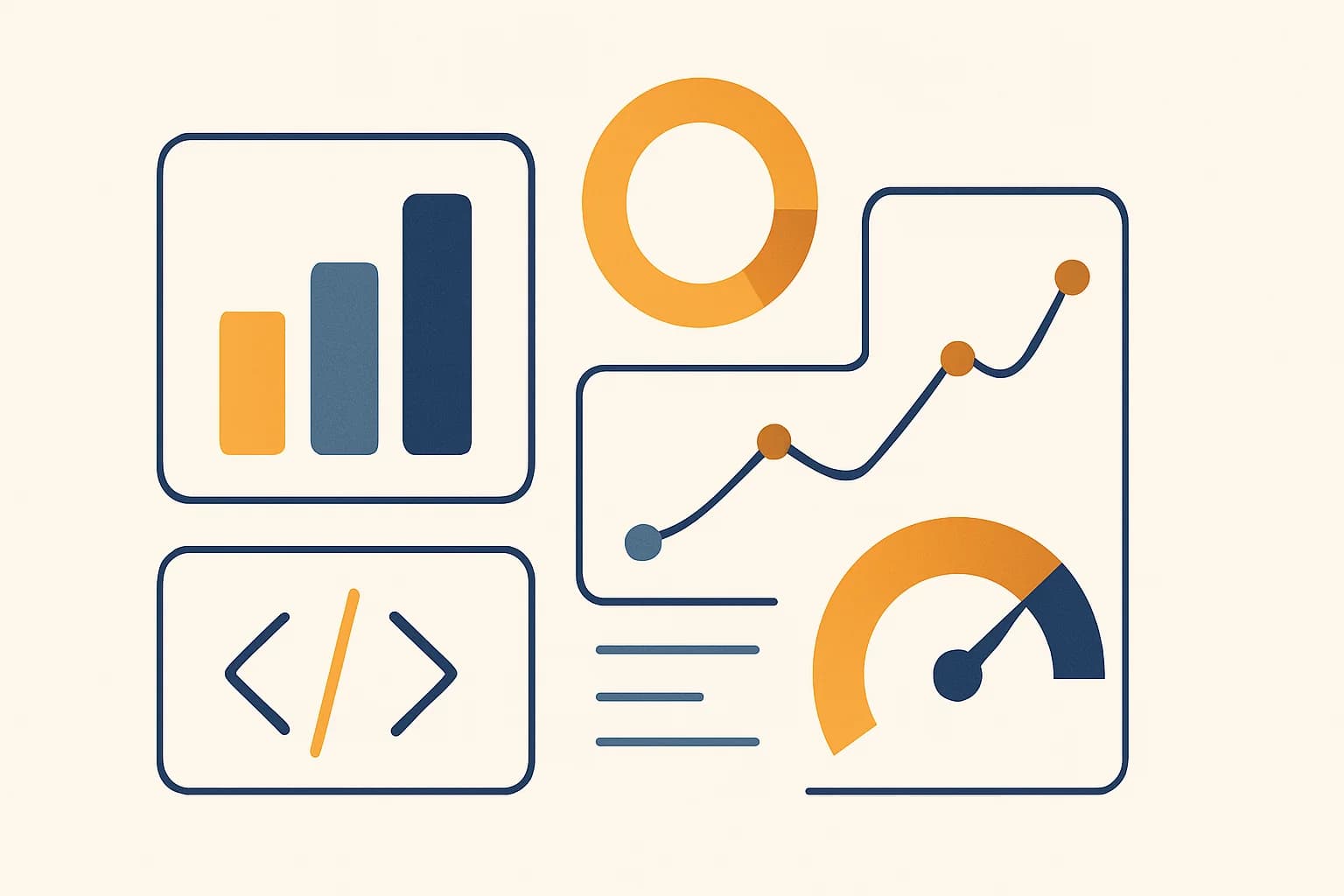
Digital Business Card Analytics: What to Track and Why It Matters
Learn how to leverage business card analytics to measure networking ROI, understand engagement patterns, and optimize your professional outreach strategy.
Digital Business Card Analytics: What to Track and Why It Matters
Unlike paper business cards that disappear into wallets and trash cans, digital business cards provide actionable data on every interaction. Here's how to use analytics to network smarter.
Why Business Card Analytics Matter
Traditional networking operates in the dark—you hand out cards and hope for the best. Digital analytics illuminate your entire networking funnel, revealing what works and what doesn't.
Measurable Benefits
Quantify Networking ROI: Know which events, conversations, and strategies generate real business results.
Optimize Your Approach: Double down on what works, eliminate what doesn't.
Track Engagement Over Time: See which contacts stay engaged and which connections fade.
Improve Conversion Rates: Understand the path from first scan to actual business relationship.
Justify Event Spend: Prove (or disprove) the value of expensive conferences and networking events.
Key Metrics to Track
Primary Engagement Metrics
Card Views/Opens
How many times your card page was viewed
Indicates initial interest level
Tracks first impression effectiveness
Unique vs. Repeat Views
Unique: Different people viewing your card
Repeat: Same person viewing multiple times
Repeat views often indicate higher interest
QR Code Scans
Direct measurement of in-person networking
Tracks physical event effectiveness
Shows which events/locations generate engagement
Contact Action Metrics
Contact Saves
Number of people who saved your vCard/contact
Strongest indicator of genuine interest
Represents actual conversion to contact list
Email Clicks
How many clicked your email address
Indicates intent to communicate
Tracks potential leads
Phone Call Clicks
Click-to-call interactions
Strong buying signal in B2B contexts
Indicates urgent or high-interest contacts
Website Visits
Clicks to your company website or portfolio
Shows research interest
Potential for deeper engagement
Advanced Metrics
Time on Card Page
How long people spend viewing your card
Longer time = higher engagement
Average should be 15-30 seconds
Geographic Data
Where your card is being scanned/viewed
Helps identify valuable networking regions
Tracks event-specific performance
Device Data
Mobile vs. desktop views
iOS vs. Android ratio
Helps optimize card design
Referral Sources
Direct QR scans
Email signature clicks
Social media profile clicks
Identifies most effective distribution channels
Time-Based Metrics
Peak Engagement Times
When people view your card most often
Identifies optimal follow-up windows
Helps schedule networking activities
Engagement Decay
How quickly engagement drops after events
Informs follow-up timing strategy
Shows relationship lifecycle
Long-term Tracking
Week-over-week changes
Month-over-month growth
Year-over-year comparison
Understanding Your Analytics Dashboard
Overview Section
Most platforms provide a dashboard showing:
Total card views (all-time)
Views this week/month
Total contact saves
Recent activity feed
How to Use It:
Check weekly for engagement trends
Monitor after networking events
Identify unusual spikes (may indicate referrals)
Event-Specific Tracking
Tag your card shares by event:
Conference name
Networking mixer
One-on-one meeting
Online sharing
Benefits:
Calculate per-event ROI
Compare event effectiveness
Decide which events to attend next year
Contact-Level Insights
See individual interactions when available:
When specific contacts viewed your card
Which actions they took
Repeat engagement patterns
Privacy Note: Platforms handle this differently. Some provide anonymous aggregate data only; others show individual-level details with consent.
Interpreting Your Data
Benchmarks and Standards
Good Performance Indicators:
30-40% of views result in contact saves
20-30% click through to your website
10-15% click email or phone
Red Flags:
High views but low saves (card may lack clear value)
Many scans but few views (QR code links to wrong place)
Zero repeat visits (content not engaging)
Common Patterns
The Spike Pattern
Sudden increase in views after an event
Expected and healthy
Should convert to saves within 48 hours
The Slow Burn
Steady, low-level engagement
Indicates ongoing sharing (email signature, social profiles)
Compounding effect over time
The Drop-Off
Engagement decreases after initial contact
Normal for most business relationships
Significant drop may indicate poor follow-up
The Revival
Renewed engagement after quiet period
Someone referred your card
Previous contact re-engaging
Potential business opportunity
Using Analytics to Improve Networking
Optimize Your Card Design
If you have high views but low saves:
Make contact buttons more prominent
Add a clear value proposition
Simplify the save process
Ensure mobile optimization
If you have high scans but low website clicks:
Add compelling portfolio/case study links
Include social proof or testimonials
Make website link more prominent
Improve Follow-Up Timing
Analyze engagement patterns:
When do people typically save your contact?
How long after scanning do they engage?
When do repeat visits occur?
Adjust strategy accordingly:
Follow up while you're top-of-mind
Send reminders when engagement historically peaks
Time content sharing for maximum impact
Refine Event Selection
Calculate event ROI:
Event ROI = (Contact Saves × Average Customer Value) / Event Cost
Compare across events:
Which conferences generate most engagement?
Do smaller meetups outperform large conferences?
Are virtual events worth the time investment?
Make data-driven decisions:
Double down on high-ROI events
Skip events with historically low engagement
Experiment with new event types strategically
Personalize Follow-Up
Segment contacts by engagement level:
High Engagement (multiple interactions):
Priority follow-up
Personalized outreach
Direct meeting invitation
Medium Engagement (viewed card, one action):
Standard follow-up
Value-add content sharing
LinkedIn connection
Low Engagement (single quick view):
Light-touch reminder
Newsletter signup offer
No aggressive follow-up
Advanced Analytics Strategies
A/B Testing
Test different approaches:
Card Design:
Different color schemes
Photo vs. no photo
Various call-to-action placements
Sharing Methods:
QR code on badge vs. phone screen
Direct link vs. QR code
Different QR code sizes
Follow-Up Timing:
Immediate vs. 24-hour delay
Different message templates
Various content types
Method:
Change one variable
Track performance over 2-4 weeks
Compare to previous period
Implement winning approach
Cohort Analysis
Group contacts by when/where you met:
January Conference Cohort:
50 scans
30 saves (60% conversion)
10 website clicks (20%)
3 became customers (6%)
February Networking Mixer Cohort:
20 scans
15 saves (75% conversion)
8 website clicks (40%)
2 became customers (10%)
Insight: Smaller, focused events outperform large conferences for your business.
Funnel Analysis
Map the complete journey:
Awareness: Card scan/view
Interest: Contact save or website click
Engagement: Email/phone interaction
Relationship: Ongoing communication
Conversion: Business outcome
Identify bottlenecks:
Where do most people drop off?
Which step has lowest conversion?
How can you smooth the funnel?
Attribution Tracking
Understand what drives business results:
First-Touch Attribution:
Credit the initial interaction
Tracks top-of-funnel effectiveness
Last-Touch Attribution:
Credit the final interaction before conversion
Shows what closes deals
Multi-Touch Attribution:
Credit all touchpoints
Most accurate but complex
Privacy and Ethics in Analytics
What's Appropriate to Track
Acceptable:
Aggregate engagement metrics
Anonymous user behavior
Opt-in individual tracking
Event-level performance
Questionable:
Detailed individual tracking without consent
Sharing analytics with third parties
Retargeting without clear disclosure
Unacceptable:
Selling contact data
Tracking outside your card platform
Invasive personal data collection
Transparency Best Practices
Clear Privacy Policy: Explain what you track and why
Opt-Out Options: Let contacts disable tracking
Data Minimization: Collect only what you need
Security: Protect analytics data appropriately
Reporting and Sharing Insights
For Personal Use
Create a simple monthly report:
Total views/scans this month
New contacts saved
Event performance comparison
Top-performing sharing channels
Action items for next month
For Team/Organization
If managing business cards for a team:
Aggregate team performance
Top performers (with privacy consideration)
Best practices identified
Team benchmarks and goals
For Executive Stakeholders
Focus on business impact:
Networking costs vs. results
Lead generation from events
Customer acquisition source attribution
ROI calculations
Tools and Integrations
CRM Integration
Connect business card analytics to your CRM:
Automatic lead capture
Engagement data in contact records
Unified view of customer journey
Better lead scoring
Marketing Automation
Trigger automated workflows:
New scan triggers welcome email
High engagement triggers sales follow-up
Abandoned contacts get nurture sequence
Calendar Integration
Schedule follow-ups automatically:
Card scan creates follow-up task
Reminders based on engagement level
Meeting requests at optimal times
Common Analytics Mistakes to Avoid
Vanity Metrics Obsession
Problem: Focusing on total views without tracking conversions
Solution: Emphasize actions (saves, clicks) over passive views
Analysis Paralysis
Problem: Collecting data but never acting on insights
Solution: Set weekly action items based on data
Insufficient Sample Size
Problem: Drawing conclusions from too little data
Solution: Wait for statistical significance (usually 30+ interactions)
Ignoring Context
Problem: Comparing incomparable events
Solution: Consider event size, type, and audience when analyzing
No Follow-Up
Problem: Great analytics but poor relationship building
Solution: Let data inform strategy, but prioritize human connection
The Future of Business Card Analytics
Emerging Capabilities:
AI-powered networking recommendations
Predictive lead scoring
Automated relationship health scoring
Integration with communication analytics
Real-time collaboration signals
What to Prepare For:
More sophisticated tracking
Greater privacy requirements
AI-driven insights and recommendations
Deeper business system integration
Start Tracking Your Networking ROI
Analytics transform networking from guesswork to strategy. See what works, optimize your approach, and build better professional relationships.
Start tracking with a Pro or Business plan—includes complete analytics dashboard, event tracking, and engagement insights. Or begin with a free card to test the platform and upgrade when you're ready to unlock full analytics.
Network smarter with data-driven insights.
Digital Business Card Analytics: What to Track and Why It Matters